Contact for media
Pavla Grabowski
Senior Communications Specialist • Marketing & Communications, Corporate communications
press@skodagroup.com
19. 6. 2026
Petr Novotný: The Billion-Crown Engine Is Set to Slow Down. Train Manufacturers Have Only Two Years of Boom Left
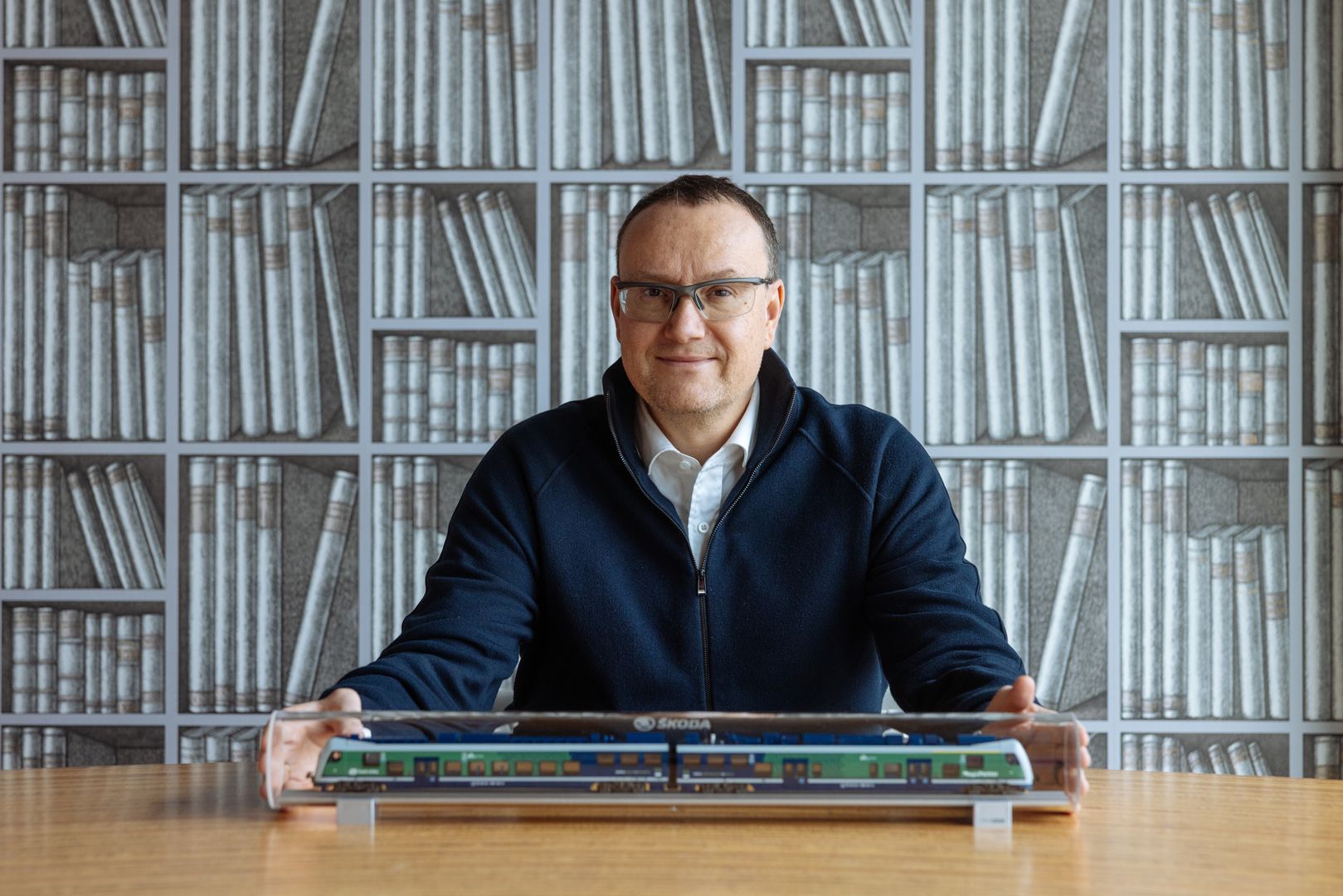
Building new trains has been a lucrative business over the past decade. Through Škoda Transportation, the PPF Group has secured a sizeable share of that market. Much of Europe’s railway sector is grappling with structural challenges, but one thing has remained remarkably consistent in recent years: train manufacturers – particularly those focused on passenger rolling stock – have been thriving. You only need to visit an industry trade fair to see it. The scale of manufacturers’ stands and presentations often rivals, or even surpasses, those of the operators that ultimately award the contracts.
Rail vehicles are built to last. A service life of 30 years is considered the minimum, while many remain in operation for twice as long. At the same time, European countries have embarked on a massive fleet-renewal cycle. In the Czech Republic alone, more than CZK 200 billion has been invested in new rolling stock over the past twelve years, according to estimates from the Ministry of Transport. Most of that money has gone to a handful of major groups that have gradually consolidated the market. One of the key players that has not only survived but strengthened its position is Plzeň-based Škoda Transportation.
Škoda Transportation is set to publish its 2025 results next week. In 2024, the company reported an operating profit of CZK 1.55 billion. Owned by the PPF Group for the past decade, the company has benefited from a strong market environment. In this interview, CEO Petr Novotný discusses how much longer the current boom can last, what the industry will look like once it ends, how Czech engineering compares with global competition, and why the country’s famed craftsmanship still struggles to command higher wages.
When I looked around the recent trade fair in Ostrava, the railway industry appeared to be in excellent shape – at least from the perspective of major manufacturers. Order books are full and large companies seem to have little trouble finding business. Can this level of stability continue for another decade?
Definitely not. This industry has three defining characteristics. Projects are long-term, highly capital-intensive and require significant investment in research and development. And then there is the cyclical nature of the market. Backlogs are currently strong, but that is largely because the market has been fuelled by waves of public subsidies.
So once those subsidies start to disappear, competition among manufacturers will become significantly tougher?
In essence, yes. But it will not only be a challenge for manufacturers. Europe will need to create a financing ecosystem capable of supporting rolling-stock procurement. Without that, the market for new trains will shrink dramatically. Future tenders will have to reflect the true cost of capital. Today, financing alone typically accounts for 25 to 30 percent of total project costs.
Why is such support necessary?
Because it would smooth out the boom-and-bust cycles in fleet renewal. The current system creates a distorted market where operators either buy a great deal or buy nothing at all. That is not healthy for operators, nor for the industry.
When do you expect the current boom to end?
Most European subsidy programmes run until 2028. After that, competition will become much fiercer. The market will likely enter a new phase in 2029.
Škoda Transportation is heavily focused on the subsidised regional passenger-train segment. Meanwhile, Siemens has established a dominant position in the locomotive market with its Vectron platform, while Škoda has largely stepped away from locomotive development. What happens when demand for regional trains starts to decline?
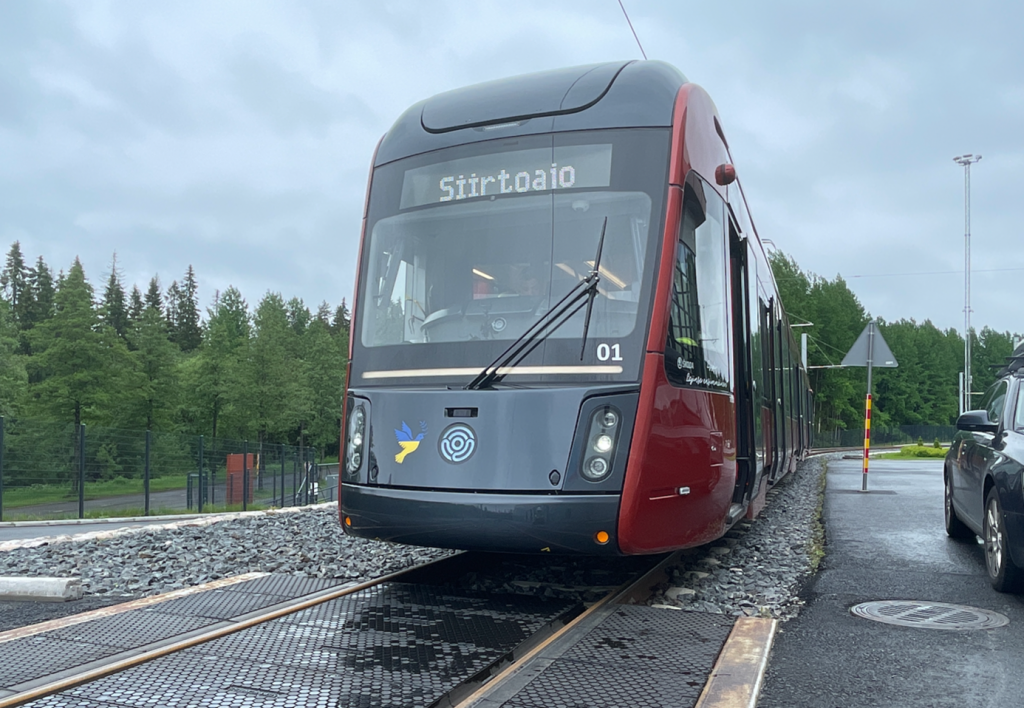
Our strategy is built around several segments. One of the most important is urban mobility, particularly metros and trams. Trams are a cornerstone of our portfolio. They are also a very specific product because each city tends to have unique operational requirements. It is rare that the same vehicle can simply be sold elsewhere. That is why we focus on modular designs. Today, we are the leading supplier in the German tram market and continue to expand. We currently deliver vehicles to around ten German cities, including Mainz, Mannheim, Bonn and Kassel.
The Czech Republic is currently pursuing two tram-train projects. Could this become a meaningful product category for Škoda Transportation?
They are certainly important projects, although at the moment they raise a number of questions, particularly regarding legislation and cost. Tram-trains sit somewhere between rail and urban transit, and their future will depend on how the segment develops. Once that becomes clearer, we will know what the next generation of vehicles should look like. We already manufacture a robust “train-metro” concept for Stockholm and are currently working on a train tender in India, so we already have a vision for this type of vehicle.
Can you estimate how much a new tram-train would cost?
That is difficult to quantify precisely, but generally speaking, pricing would fall somewhere between that of a conventional tram and a regional train.
How would you describe Škoda Transportation’s position in today’s European market? It seems that the market has largely consolidated, with companies such as Škoda and Poland’s Pesa finding their place alongside the major Western manufacturers, while Chinese players are attempting to gain a foothold.
We divide our markets into strategic markets and opportunity markets. Strategic markets include the Czech Republic, neighbouring countries, the Balkans and increasingly Sweden and other Nordic countries. Opportunity markets include India and the United States, as well as European countries without strong domestic manufacturers or where local producers may be constrained by capacity. Italy is a good example.
In a European market driven by open tenders, how much does a manufacturer’s nationality still matter?
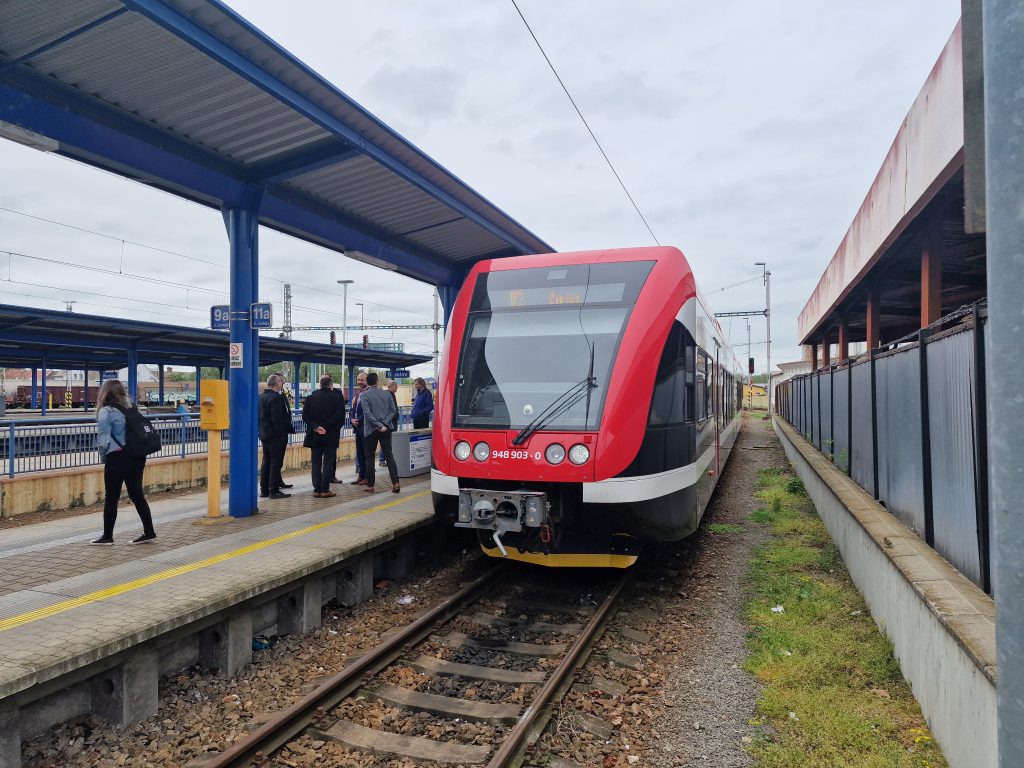
It still matters. Success is not determined solely by where a product is manufactured. Development, engineering and service capabilities are equally important. The value chain is long, and proximity to research institutions, certification bodies and customers plays a role. Domestic manufacturers will always enjoy certain advantages. In the Czech Republic, we benefit from a highly developed railway ecosystem, with a strong supplier base and a wealth of project opportunities. A good example is the BEDMU concept – a battery-electric train that can also recharge using a diesel engine. We are developing this concept together with RegioJet, and it has potential beyond the Czech market because many countries face the same challenge of limited railway electrification.
Speaking of battery trains, how satisfied are you with the performance of the first battery-powered Panter units? Some industry observers suggest that placing heavy batteries on the roof may not have been the ideal solution.
That is probably a question for our engineers. What I can say is that the project has provided invaluable experience. For a manufacturer, there is no substitute for operating the technology in real-world conditions. The first four units used batteries from different suppliers, which influenced their placement. Since then, we have arrived at what we believe is the optimal solution, and we hope to apply it to dozens of additional vehicles that could begin entering service as early as this year.
How full is your production capacity for the coming years?
Our backlog currently stands at around €4 billion, which gives us roughly three years of visibility. That said, the cyclical nature of the industry is already apparent. Next year, for example, we expect a slight dip in workload, and we will need to manage that carefully. Some activities that we have previously outsourced will likely be brought back in-house. Over the past few years, we have built a fair amount of flexibility within the Group, including across our international operations and workforce. After that temporary slowdown, however, production volumes are expected to increase significantly again. Cyclicality is actually one of the biggest challenges from a profitability perspective because fixed costs do not simply disappear.
A major tender is currently entering its final stage in Prague and the Central Bohemian Region. The contract covers suburban rail services and will require approximately 60 new trains. Only two operators remain in the competition – Czech Railways and RegioJet. Are you supplying bids to both?
Yes, we submitted proposals to both operators in May. From my perspective, what makes this tender particularly significant is its transparency. Judging by the questions raised during the process, it appears that four major rolling-stock manufacturers are competing for the supply contract. Everyone has taken it seriously, and I do not believe the tender conditions favour any particular participant.
Looking beyond the next few years, how do you see the future of European manufacturing? Given the growing competition from China, is advanced engineering still sustainable in the Czech Republic over the long term?
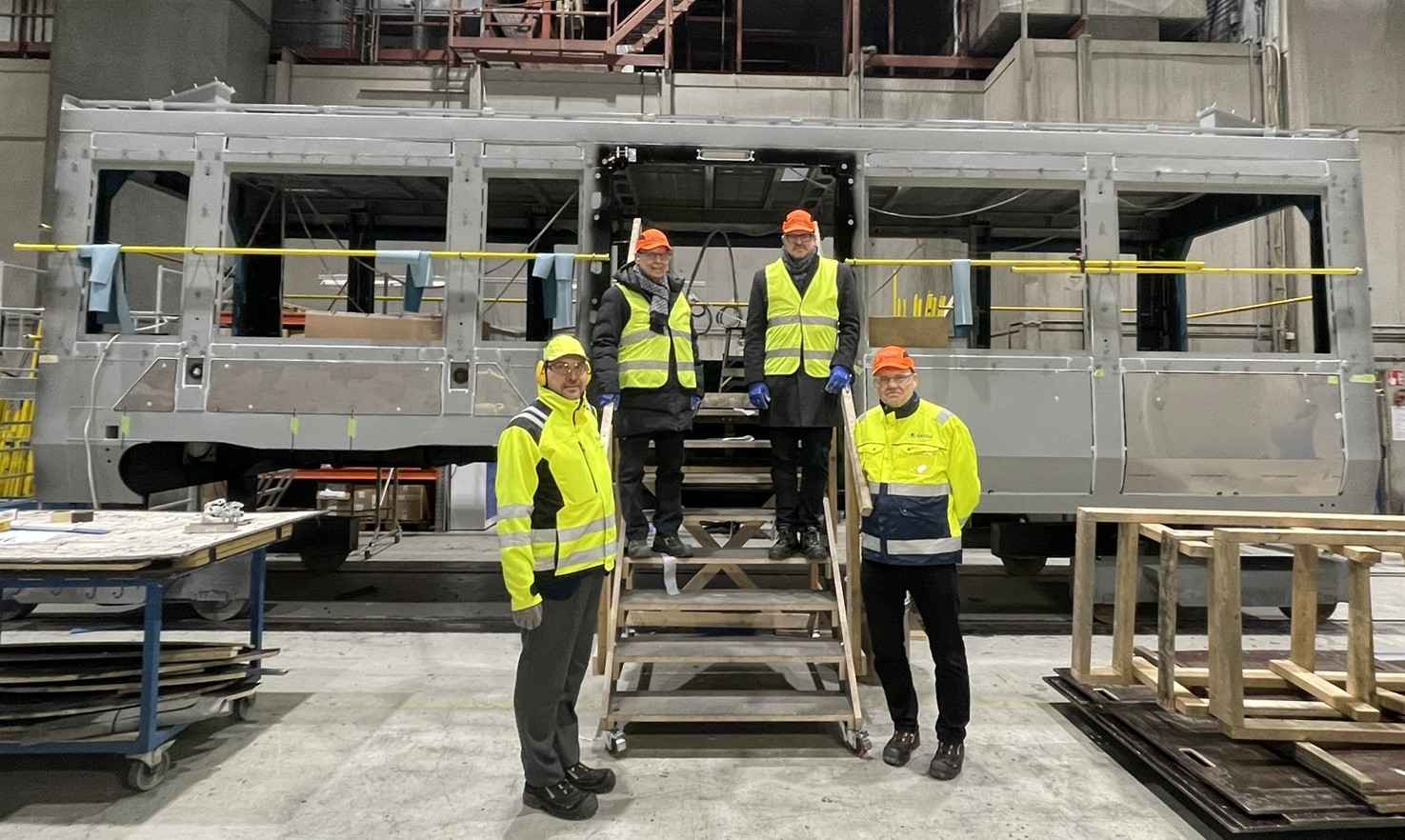
Well, we do not operate only in the Czech Republic. We also have manufacturing facilities in Finland and Turkey. Labour accounts for roughly 25 percent of our total costs, which is considerably higher than in the automotive industry. The Czech workforce is extremely efficient – I would even say among the most efficient in the world. Labour costs remain relatively low compared with Western Europe, while productivity and quality are exceptionally high. There is definitely some truth behind the saying about the “golden Czech hands”.
Will that remain the case?
Things will inevitably evolve. We can see how German automotive companies continue to invest in the Czech Republic, creating upward pressure on labour costs. At the same time, there is still significant room to improve productivity. Looking at what we have achieved at Škoda Transportation over the past two years, we have made major progress in efficiency, and I believe there is still more to come.
If Czech employees are so productive, why do wages still lag behind most Western European countries?
I think part of it is cultural. We Czechs are not particularly strong negotiators. The foundations for higher wages are certainly there because the Czech Republic is genuinely one of the best places in the world for manufacturing. When I compare it with my experience in India, for example, every day brought a new challenge. Situations that might happen once or twice a year here could occur once or twice a day there.
You mean serious problems?
Not necessarily problems – more unexpected situations that make you stop and wonder, “How on earth could that happen?” One of the Czech Republic’s greatest strengths is that once a process is set in motion, it tends to run reliably and consistently. Productivity is high because people focus on getting the job done rather than overcomplicating things. Engineering and manufacturing are both very strong here. What we need to learn is how to promote ourselves more effectively. That is often the challenge of being a smaller nation: if you want to succeed internationally, you need to be visible and, if you will forgive the expression, a little more street-smart.
Is that weakness mainly a marketing issue, or is it related to a broader challenge facing Czech industry – limited access to customers and therefore lower margins?
I would lean more towards marketing, although that is partly speculation on my part. You cannot simply sell a train for 20 percent more than the market price. The market is transparent and industry players know exactly what things should cost. In competitive tenders, prices are especially clear. The real opportunity to influence margins lies in controlling costs. Materials account for around 65 percent of a train’s price. Another major factor is production volume – whether you are building five trains or fifty. Larger contracts also give you greater flexibility in managing labour costs. In the end, contract size is one of the most important drivers of a company’s economics.
You mentioned that you manufacture not only in the Czech Republic but also in Finland and Turkey. How does Czech manufacturing compare?
It is important to remember that we are not in the automotive industry. Our business is far more labour-intensive and heavily dependent on materials, which also means a significant indirect exposure to energy costs through our suppliers. In terms of energy and material costs, the Czech Republic remains competitive. It is not a major competitive advantage, but fortunately it is not a disadvantage either. However, factors that push energy prices higher – emissions allowances and similar measures – gradually erode competitiveness, particularly at the supplier level. It would certainly help if more attention were paid to addressing those issues.
The interview was published in Hospodářské noviny; it was written by Jan T. Beránek.